Austin's appeal is well earned. It's one of the strongest job markets in the country, with a genuine live music and food scene, a deep well of outdoor recreation, and that unmistakable Texas energy that keeps drawing people in year after year. For a lot of buyers, Austin is genuinely the right call, and no amount of comparison shopping is going to change that.
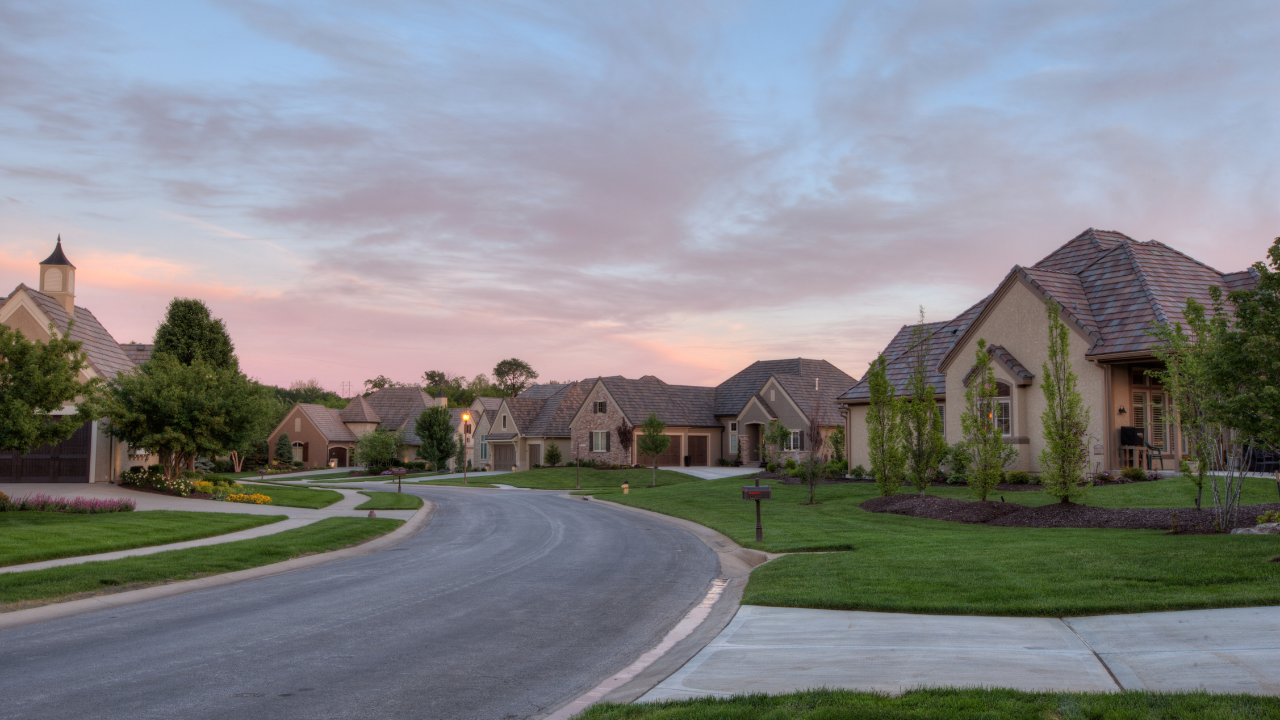
But Austin isn't the only way to enjoy what Central Texas has to offer. The metro's median home price sits somewhere around $440,000–$460,000, and buying inside the city core, especially in popular neighborhoods, can push well past that. For buyers who love the region but want more house, a bigger lot, or simply a lower monthly payment, a cluster of Central Texas cities along the I-35 and I-14 corridors offers a genuinely appealing alternative: real proximity to Austin's job market, airport, and culture, at a noticeably lower cost of living. This guide walks through what makes these alternatives worth a look, how to figure out where you'd fit best, and a closer look at six of the strongest cities to consider: Temple, Belton, Salado, Harker Heights, Nolanville, and Killeen.
What Central Texas Offers as an Alternative to Austin
A few numbers help explain why so many buyers are giving these cities a serious look alongside Austin:
- Meaningfully lower housing costs. Median home prices in most Central Texas alternative cities run from around $200,000 to $500,000, compared to Austin's $440,000–$460,000 metro median, with some Austin neighborhoods running far higher.
- Often lower property tax stacks. Smaller cities generally carry lower combined effective tax rates than Austin-area MUD-heavy developments, though this varies by community and is always worth confirming directly.
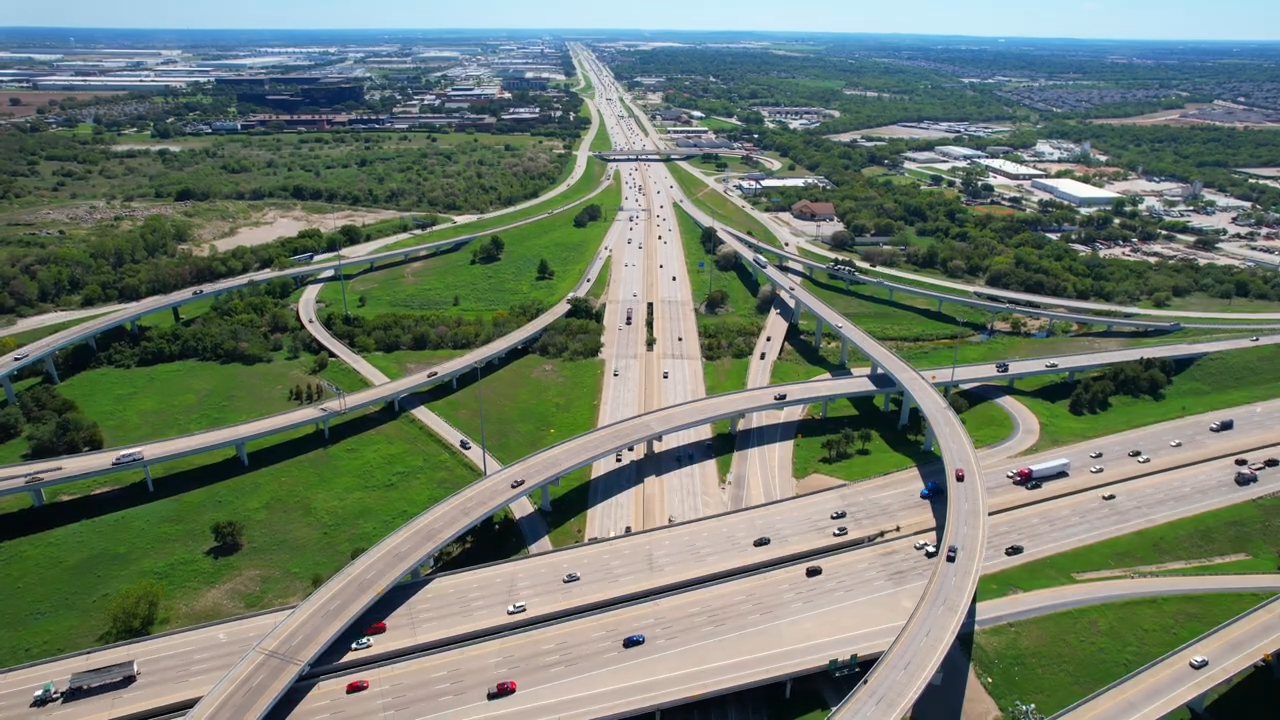
- Still genuinely commutable. Every city on this list sits within roughly 30 to 75 minutes of Austin via I-35, making a hybrid work schedule or occasional office day realistic, even if a five-day-a-week commute is a bigger ask.
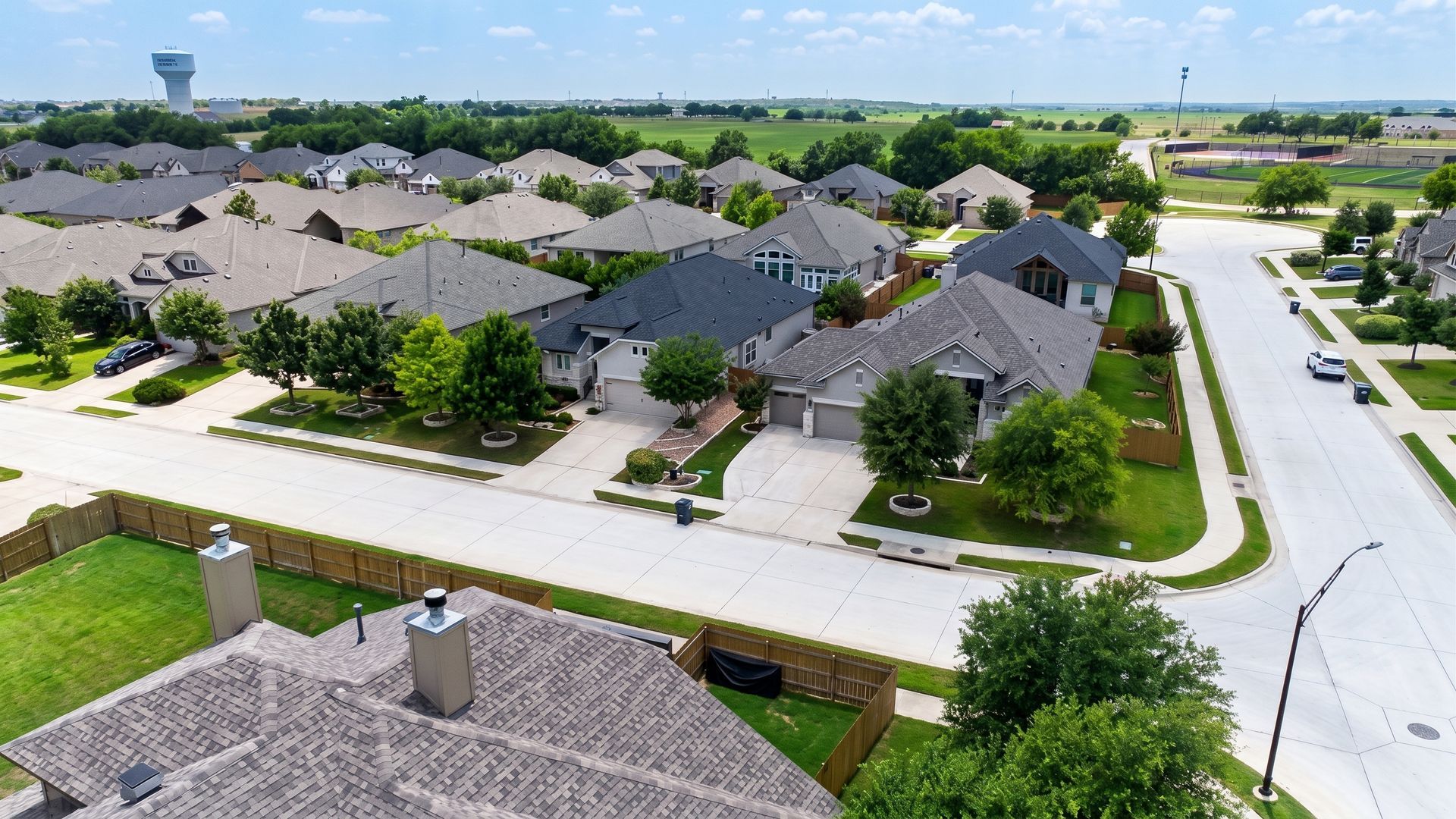
- More room to spread out. Larger lots, quieter streets, and small-town pacing are easier to find outside Austin's rapidly infilling core.
- Access without the price of proximity. Central Texas cities still put you within reach of Austin's airport, healthcare systems, and entertainment, without requiring Austin prices to enjoy them.

For remote workers, hybrid employees, military families, retirees, and buyers who simply want more for their budget, Central Texas has become a genuinely compelling answer to "I love this region, but is there another way to enjoy it?"
Where Should You Live in Central Texas?
With so many towns along the I-35 corridor, the right fit really comes down to three questions:
How often do you actually need to be in Austin? If it's daily, you'll want to stay closer to the southern end of this list (Salado, Belton, Temple). If it's occasional or fully remote, cities further north like Killeen, Harker Heights, and Nolanville open up, since the Austin drive becomes a once-in-a-while trip rather than a daily grind.
What's your budget and priority: price, schools, or lifestyle? Killeen offers the lowest entry price point in the region. Salado offers historic charm and top-rated schools at a premium. Temple and Belton split the difference with strong new construction inventory and solid school districts. Harker Heights and Nolanville lean toward military-friendly affordability with newer housing stock.
Do you need proximity to Fort Cavazos, a hospital system, or a specific employer? Military families will naturally gravitate toward Killeen, Harker Heights, and Nolanville. Healthcare workers may prioritize Temple's Baylor Scott & White campus. Retirees and remote workers often have more flexibility to prioritize lifestyle over commute.
Below is a closer look at six of the strongest Central Texas alternatives to Austin, each with a very different personality and price point.
5 Top Central Texas Cities to Consider
1. Temple, TX
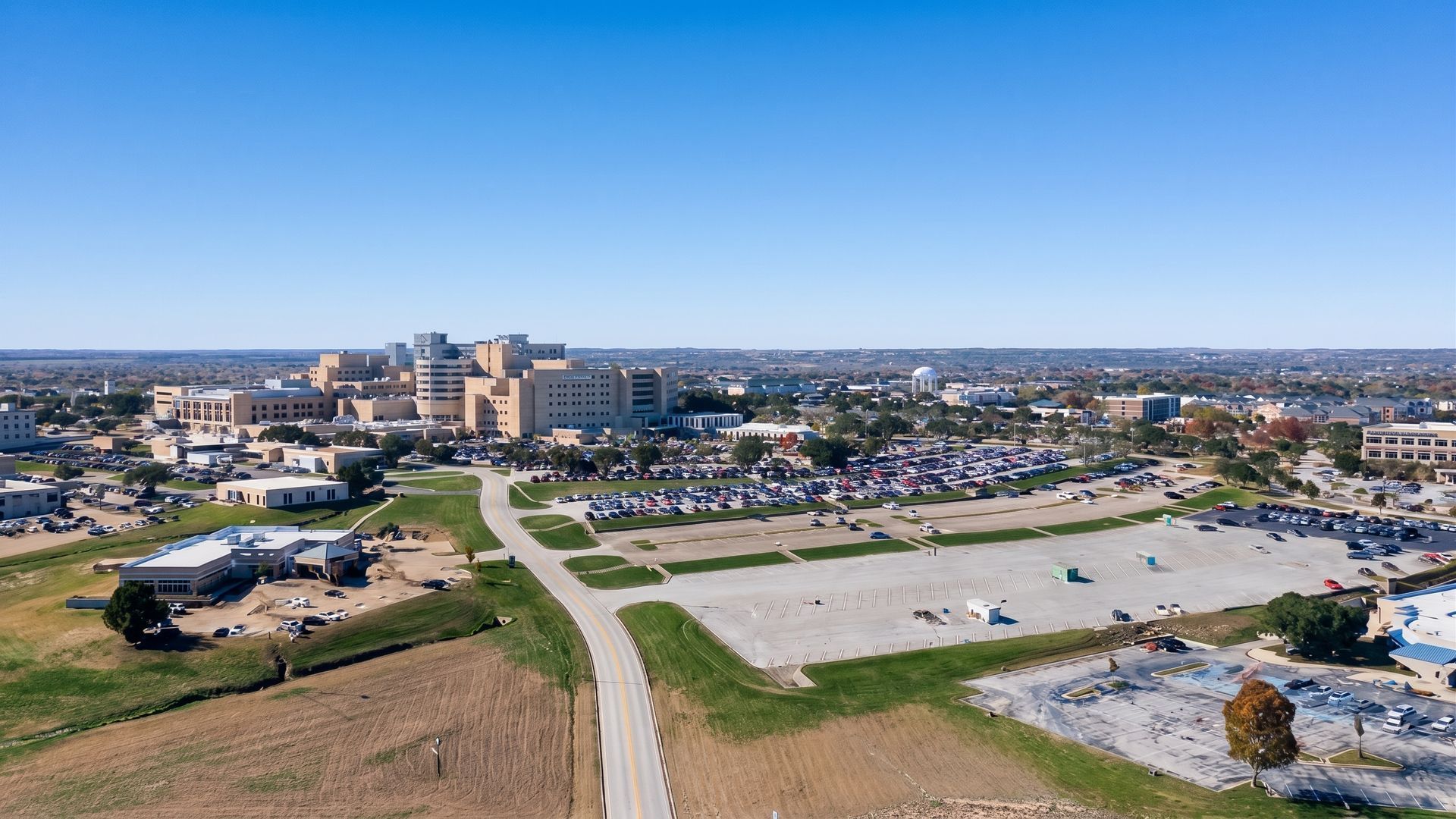
Temple is the region's healthcare and economic anchor, home to Baylor Scott & White's flagship medical campus and a fast-growing new construction market. The city sits roughly 68 miles from downtown Austin, about a 1-hour-and-6-minute drive under normal conditions, with rush-hour traffic adding 15–20 minutes.
Cost of living: Temple's median home price generally runs in the $255,000–$300,000 range, a fraction of Austin's metro median, with new construction communities offering entry points in the low $200,000s.
Types of homes: Temple has one of the most active new construction markets in Central Texas, with dozens of active communities from national builders offering everything from starter townhomes to custom homes past $700,000.
Who it's best for: Healthcare and medical professionals, first-time buyers looking for more home for their budget, and hybrid workers who can manage an occasional Austin commute.
2. Belton, TX
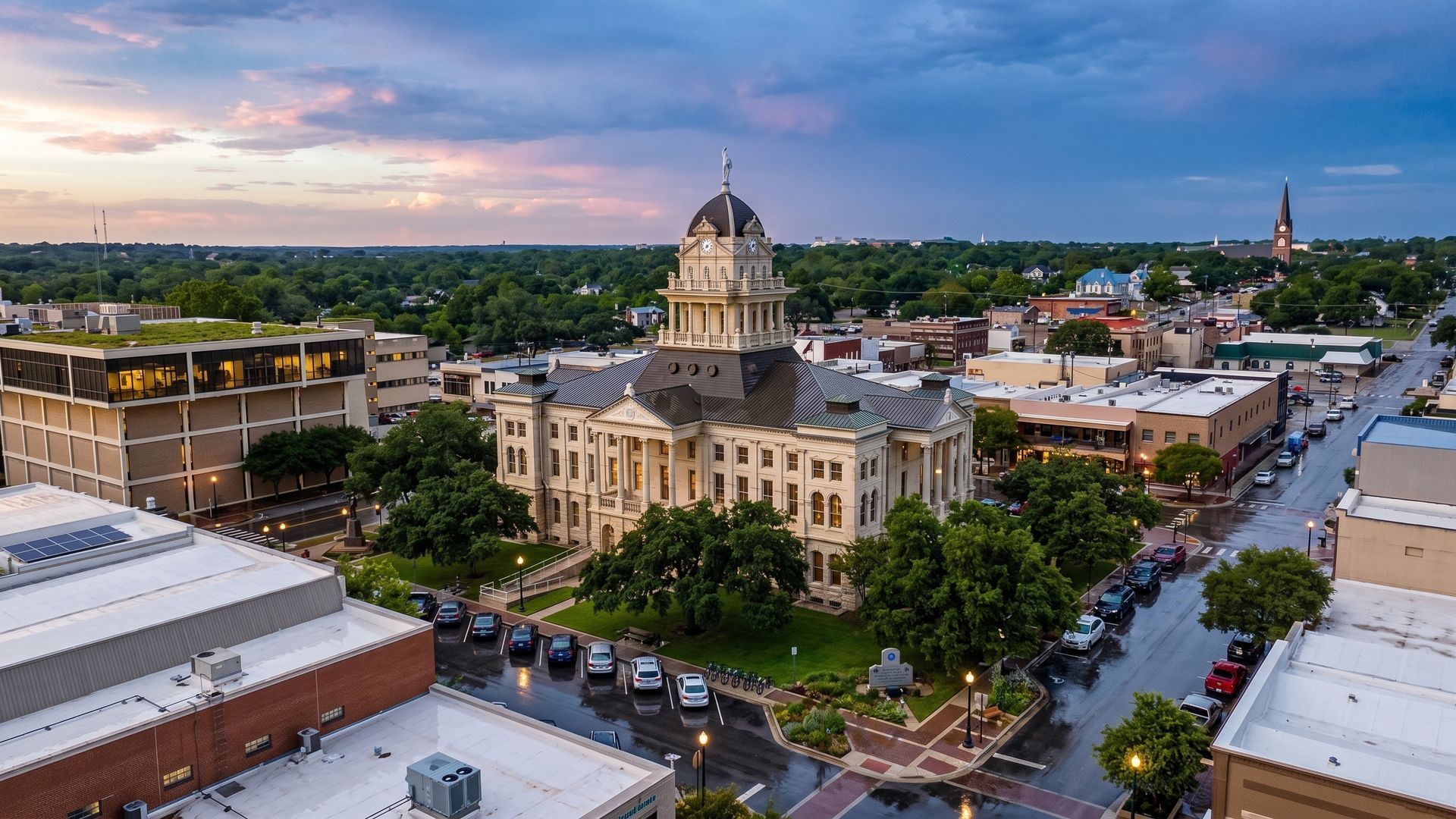
Belton, the Bell County seat, pairs a walkable historic downtown with some of the region's most sought-after schools and direct access to Belton Lake and Stillhouse Hollow Lake. It sits about 55–60 miles from Austin, generally an hour to an hour and 15 minutes depending on traffic through Round Rock and Georgetown.
Cost of living: Belton's median home price typically runs around $288,000–$322,000, carrying a modest premium over Temple, largely tied to its school district reputation.
Types of homes: A genuine mix, from established in-town neighborhoods to large master-planned communities like Three Creeks, plus new construction starting in the low $230,000s and lakefront properties reaching well into the $700,000s.
Who it's best for: Homebuyers prioritizing top-rated schools, lake-lifestyle buyers, and anyone who wants small-town character with real amenities.
3. Salado, TX
Salado is the most upscale option on this list: a historic village along Salado Creek known for limestone architecture, art galleries, and top-rated Salado ISD schools. It's about 65–70 miles from Austin via I-35, generally an hour or so depending on traffic.
Cost of living: Salado's median home price runs notably higher than its neighbors, generally $450,000 to $500,000, with entry-level homes starting around $300,000–$350,000 and estate properties reaching well past $1 million. Even at that premium, it's still typically below Austin's core neighborhoods for comparable square footage and land.
Types of homes: Larger lots, custom and luxury construction, and a limited but distinctive inventory centered on the historic district and surrounding Hill Country terrain.
Who it's best for: Buyers who want small-town character and top schools and are willing to pay a premium for it, retirees, and move-up buyers seeking more land and architectural character than a typical subdivision offers.
4. Harker Heights, TX
Harker Heights sits just east of Killeen, offering newer housing stock, the region's highest household incomes outside Salado, and a quieter, more suburban feel than Killeen proper. Austin is roughly 70–75 miles away, about an hour and 10 to 15 minutes via I-35.
Cost of living: Median home prices generally run from $300,000 to $325,000, roughly 20% above neighboring Killeen, reflecting newer construction and better-maintained neighborhoods.
Types of homes: A mix of established subdivisions and newer developments, with entry-level homes in the $220,000s and new construction generally running $280,000 to $380,000.
Who it's best for: Military officers, senior NCOs, and civilian professionals who want newer housing, strong retail along Heights Boulevard, and a short commute to Fort Cavazos without living directly in Killeen.
5. Nolanville, TX
Nolanville is a small, tight-knit city sitting immediately adjacent to Fort Cavazos's main gate, making it one of the shortest commutes to post anywhere in the region. Austin sits a bit farther out from here, generally 75+ miles and well over an hour, making Nolanville a better fit for occasional Austin trips than a regular commute.
Cost of living: Nolanville's median home price runs around $310,000, occupying a middle ground between Killeen's affordability and Harker Heights's newer inventory, with a cost of living that stays below the national average overall.
Types of homes: A growing mix of established homes and newer infill construction as the Fort Cavazos region continues to expand, with updated floor plans and energy-efficient builds increasingly common.
Who it's best for: Military families who want the shortest possible commute to Fort Cavazos's main gate, along with a tight-knit, small-town community feel.
6. Killeen, TX
Killeen is the region's largest city and its most affordable, anchored directly by Fort Cavazos, the largest active-duty armored post in the country. It's the farthest from Austin on this list, generally 70+ miles and well over an hour, making it best suited to buyers who don't need frequent Austin access.
Cost of living: Killeen offers the lowest median home prices in the region, generally in the $200,000–$260,000 range, making it one of the few major duty-station cities where a mid-grade income can comfortably afford a well-appointed home.
Types of homes: A wide range of price points and inventory, from older, more affordable stock in northwest Killeen to newer construction south of I-14 built to current energy codes.
Who it's best for: Military families working within their BAH budget, first-time buyers prioritizing the lowest possible price point, and anyone who wants the most home for their money in the Fort Cavazos corridor.
How These Cities Compare
- Closest to Austin: Temple and Belton offer the shortest realistic commutes, in the 1-hour to 1-hour-15-minute range.
- Most affordable overall: Killeen offers the lowest median home prices by a wide margin, followed by Harker Heights and Nolanville.
- Best schools: Salado and Belton consistently draw buyers specifically for their school district reputations.
- Best for military families: Nolanville offers the shortest commute to Fort Cavazos's gate, while Harker Heights offers newer housing stock at a modest premium.
- Most character and charm: Salado's historic downtown is unmatched in the region, though it comes at the highest price point on this list.
Making the Move: What to Do Next
If Central Texas is looking like the right alternative to Austin, a few steps can make the transition smoother:
- Get pre-approved and set a real budget, factoring in property taxes and, for new construction, any MUD or PID fees specific to the community.
- Test your actual commute at actual rush-hour times before committing to a city, since traffic patterns and drive times vary meaningfully across this list.
- Decide your non-negotiables: school district, commute frequency, lot size, or proximity to a specific employer or Fort Cavazos.
- Compare new construction and resale side by side, since several of these cities have active new-home communities worth touring alongside established neighborhoods.
- Work with a local agent who knows the full region, not just one city, since the right fit often depends on trade-offs between neighboring towns rather than a single obvious choice.
Ready to Explore Your Central Texas Options?
Austin is a great city, and for plenty of buyers it's still the right answer. But Temple, Belton, Salado, Harker Heights, Nolanville, and Killeen each offer a genuinely appealing alternative: real proximity to everything Austin offers, without needing to pay Austin's price to get it. The right fit depends on how often you actually need to be in Austin, what you're willing to trade for a lower cost of living, and what kind of community you want to come home to.
If you'd like help comparing Austin against these Central Texas alternatives, current pricing, and what your budget can actually buy in each city, I can walk you through the options and help you find the right fit. Call or text 254-598-0010 to get started.