

Commuting from Temple, TX: What to Expect
Discover Temple, TX Through Videos
If you're weighing a move to Central Texas, chances are commute time is somewhere near the top of your list of questions. Temple sits in a genuinely convenient spot along the I-35 corridor, close enough to Austin, Waco, and Fort Cavazos (formerly Fort Hood) to make regional commuting realistic, while still offering the lower cost of living and small-city pace that draws so many buyers to living in Temple, TX in the first place.
But "convenient" doesn't mean identical to commuting inside a big metro. Distances, drive times, and traffic patterns around Temple work differently than they do in Austin or DFW, and knowing what to expect before you buy can save you a lot of frustration later. This guide breaks down real driving times to the region's major job centers, what public transportation actually looks like here, and how to plan a commute that fits your lifestyle.
Commuting to Austin
Austin is the job center most new Temple residents ask about, and it's also the longest of the region's major commutes. Temple sits roughly 68 miles from downtown Austin, and the drive runs almost entirely along I-35 South, passing through Georgetown and Round Rock before reaching the city.
- Estimated commute time: around 1 hour and 6 minutes non-stop, with peak-hour traffic commonly adding 15–20 minutes each way. A round trip during rush hour often lands closer to 2.5 hours total.
- Estimated fuel cost: roughly $12–$18 one way, or about $25–$35 round trip for a daily solo commute, which can add up to $500–$700 a month for someone driving in five days a week.
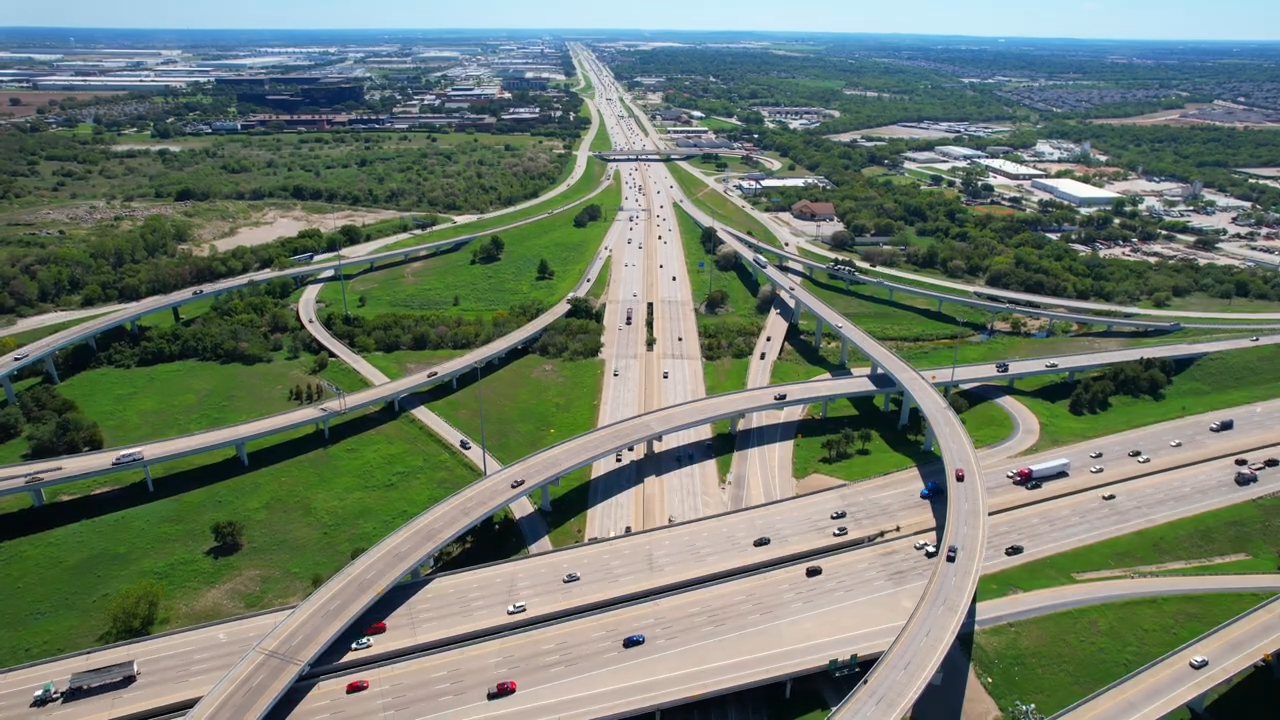
Traffic tends to build gradually rather than hitting all at once. The stretch from Temple through Georgetown is usually free-flowing, but congestion typically thickens once you cross into Round Rock and the northern Austin suburbs, especially between 7–9 a.m. and 4–6:30 p.m. Construction along I-35 through this corridor has been fairly constant in recent years as the state works through widening projects, so delays can vary week to week regardless of the time of day.
Because of the distance, most people who make this commute daily build in some flexibility, whether that means staggering their start time to avoid the worst of rush hour, working a hybrid schedule, or carpooling to make the drive feel shorter. For those who only need to be in Austin a couple of times a week, the trip is a much easier trade-off, and many buyers specifically choose Temple because it puts them within striking distance of Austin without Austin's price tag. Buyers who need to be in an Austin office five days a week, especially with an early start time, may still want to weigh whether a community closer to Georgetown or Round Rock is a better fit, even if it means a smaller home or a higher price per square foot.
Commuting to Fort Cavazos (Fort Hood) and Killeen
For military families or civilian employees working at Fort Cavazos, Temple offers one of the easier commutes in the region. Killeen sits about 25 miles from Temple via US-190, with Belton sitting almost exactly at the halfway point between the two cities.
- Estimated commute time: roughly 31 minutes non-stop, with traffic adding only a few minutes even during peak hours since this route sees far less congestion than the I-35 corridors heading toward Austin or Waco.
- Estimated fuel cost: around $2–$3 one way, or roughly $5 round trip, making this the least expensive of the region's major commutes — typically under $100 a month for a daily driver.
Because the drive is short and the highway between Temple and Killeen rarely backs up the way I-35 does, this commute tends to feel far more predictable day to day. Some residents split the difference geographically by looking at homes in or near Belton, which shortens the drive to Fort Cavazos slightly while staying close enough to Temple for shopping, healthcare, and schools. This short, low-stress commute is one of the main reasons Temple has become such a popular home base for military families stationed at Fort Cavazos who want more house for their money without living directly in Killeen or Harker Heights.
Commuting to Dallas–Fort Worth
A daily commute to DFW from Temple isn't realistic for most people. The drive covers roughly 129 miles one way to Dallas along I-35, and reaching DFW International Airport specifically stretches to about 145 miles.
- Estimated commute time: around 2 hours non-stop to Dallas proper, with DFW Airport and the northern parts of the metroplex adding another 15–20 minutes beyond that. Peak-hour traffic near the metroplex itself can extend the trip further.
- Estimated fuel cost: roughly $23–$35 one way, or $45–$70 round trip, which puts a daily commute well over $1,000 a month if driven solo five days a week.
This distance puts Temple firmly outside the range of a normal daily commute to the metroplex, and the math simply doesn't work for most people trying to do it five days a week. Where this route makes more sense is for occasional trips: business travel, visiting family, or catching a flight out of DFW, all of which are manageable as a once-in-a-while drive rather than a daily grind. Amtrak's Texas Eagle line also connects Temple directly to Dallas–Fort Worth for those who'd rather not drive, though its once-daily schedule makes it far more practical for occasional travel than routine commuting.
If your job is based in DFW, Temple generally only makes sense if you're fully remote, commute infrequently, or are relocating for retirement or lifestyle reasons rather than daily work travel.
Getting Around Temple Without a Car
While most Temple residents rely on personal vehicles, the city does have public transportation options worth knowing about, especially if you're relocating from a larger city with more robust transit.
- The HOP. Hill Country Transit District operates The HOP, the only regional public transit system serving the Killeen-Temple area, covering a nine-county region that includes Bell County. The system includes both fixed urban routes and paratransit, demand-response rural service. The HOP also offers an on-demand, app-based micro-transit option, which functions more like a shared rideshare than a traditional fixed bus route.
- Amtrak. Temple's historic train depot offers daily Texas Eagle service running between San Antonio and Fort Worth, making it possible to reach Austin, Waco, or DFW without driving, though schedules are limited to once daily in each direction.
- Regional bus service. Greyhound and Arrow Trailways operate out of the Temple Bus Center, with daily departures to Waco, Killeen, Austin, and Houston.
- Rideshare. Uber and Lyft are both available in Temple for shorter local trips.
For day-to-day life, though, most residents will still want their own vehicle. Temple's public transit is genuinely useful for reaching nearby cities without driving, but it isn't set up to replace a car for daily commuting or errands the way transit works in larger metros.
Tips for Planning Your Commute Before You Buy
If commuting is a major factor in your move, a little homework before you go under contract can save you a lot of stress later:
- Drive the actual commute at the actual time. A Sunday afternoon test drive will look nothing like a Tuesday morning departure. If possible, do a trial run during real rush-hour conditions before committing to a neighborhood.
- Factor in where in Temple you're buying. A home on the north side of town near I-35 will have a very different Austin commute than one on the south or east side, even if both are technically "in Temple."
- Ask about your employer's flexibility. Many companies with Austin offices now allow hybrid schedules, which can make a Temple commute far more sustainable than a five-day-a-week grind.
- Consider your daily radius, not just your commute. Grocery stores, schools, medical care, and daily errands matter just as much as the drive to work, and new construction communities in Temple are increasingly built with all of these close by.
- Talk to a local agent about traffic patterns. Someone who lives and works in the area can tell you which routes and neighborhoods tend to add or save time during peak hours, information that's hard to find from a listing alone.
Ultimately, whether commuting from Temple makes sense comes down to where you work and how often you need to be there. A short hop to Waco or Fort Cavazos, or an occasional trip into Austin, fits easily into daily life here. A five-day-a-week Austin or DFW commute is a bigger ask, though far from impossible for the right person and the right schedule.
If you're trying to figure out which Temple neighborhoods or new construction communities make the most sense for your specific commute, I can help you weigh the trade-offs and find a home that fits both your budget and your daily drive. Reach out at 254-598-0010 to talk through your options and start exploring what living in Temple, TX could look like for you!

Aundrea Dudik
With over 150 clients served in Central Texas real estate, Aundrea helps her buyers navigate relocating seamlessly. Known for her expertise, she has a lot of valuable insights on her YouTube channel to make moving to Central texas a hassle-free experience.